Delivering a consistent security posture at scale
Shareability / Reusability
POND
Capture on management interface
view-pcap mgmt-pcap mgmt.pcap
scp export mgmt-pcap from mgmt.pcap to admin@192.168.1.1:/
1. Concept
Basic deployment vs Distributed Deployment
Mode:
Panorama mode
Log Collector mode
Management only mode
2. Deployment
Select Thick Provision Lazy Zeroed as the disk format.
Wait for login prompt
Panorama login:
2.1 Old Way: Register the Panorama Serial Number in CSP.
For VM, Serial number is in the email:
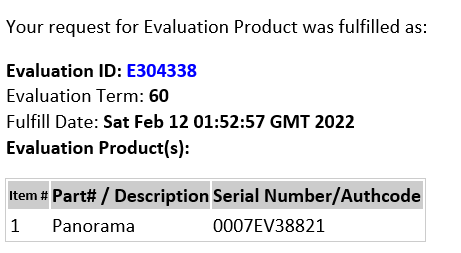
In Support Portal Devices list, register received Panorama Serial Number/Authcode,
if VM doesn't have Internet connection, click the Action to download key, then in Panorama license page, click.
Manually upload license key
1. VM only:
Enter the Panorama
2. In license page, click
- 2.2 New Eval with "Software NGFW Credits"
- Request Eval
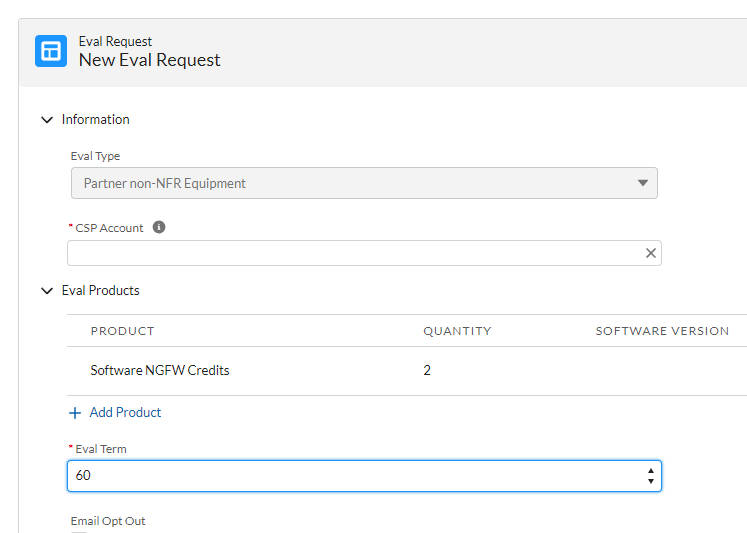
- In received email, click Activate, will be redirected to CSP to create deployment profile.

- Select Products > Software NGFW Credits and click the Details button on the credit pool you used to create your profile.
- On the far right, select the vertical ellipsis (More Options) and select Provision Panorama, and Provision, this will generate Panorama serial number and Auth-Code.
- In newly installed Panorama, first time login will see.


https://docs.paloaltonetworks.com/panorama/10-0/panorama-admin/set-up-panorama/register-panorama-and-install-licenses/activateretrieve-a-firewall-management-license-on-the-panorama-virtual-appliance.html#id5fd6c4c0-1cc7-456d-a959-291b1726cda6

=======Panorama====
Template: Network, Device
Template Stack
by default, template at the top take precedence
Template variable name starts with $
variables are case-sensitive
variable is defined and set initial value in either Template or Template Stack level, initial value can be override in template stack, to setup individual value for each FW stack, Export and Import Variable CSV.
Variable can also be overridden at device level: Manager Deices > Summary > "firewall" > Variable column > Edit. But not recommended.
On firewall, panorama pushed settings shows Read-Only, but can be override.
Device Group : Policies, Objects - FW belongs to a single device group
Global shared group contains device group
Device groups are in hierarchy, children group inherits settings from parent; Templates are independent settings, Template Stack combines them together, and resolve conflict by templates order.
By default, Panorama will use the value in the lowest group in the hierarchy
When you make changes to a firewall in an HA pair, Panorama sends the appropriate changes to each firewall separately. This operation is different from how redundant firewall pairs operate without Panorama.
You might have an item that you do not want modified for any reason in any descendant device groups. If you check the box for Disable override on the element itself
This behavior is different from the behavior in templates. You can modify an element directly on a managed firewall when that element has been pushed down through a template from Panorama. You cannot modify an object directly on a managed firewall when that object has been pushed down through a device group from Panorama.
Policies
Post Rules
Default Rules
Deploy order: Local rule takes precedence, but can be change to Shared group take precedency.
shared group
device group
local config
no local device edit of shared object and policy
shared pre policy
device group pre policy
local FW policy
device group post policy
shared post policy
combined rules preview.
yellowdot =override
Context - switch between global to individual device
commit - Panorama|
push - device
Troubleshooting
1. on Panorama:
show devices all
2. on firewall:
show panorama-status
========
Server error : Failed to change system mode from management-only to panorama.
Please add a new virtual logging disk with more than 50.00 GB of storage capacity to support panorama mode.
Not enough RAM: Found 7.78 GB, need 16.0 GB to support panorama mode.
Not enough CPU cores: Found 4 cores, need 8 cores to support panorama mode
disconnect issue
By default, Panorama and firewalls use predefined (factory/PAN-OS built-in) certificates to set up that management SSL/TLS tunnel, not visibla in GUI Panorama > Certificate Management > Certificate
Panorama acts as the SSL server, the firewall acts as the client, and each presents a certificate to the other.
Server certificate (Panorama's): predefined cert whose Common Name is the IP or FQDN of the Panorama management interface.
Client certificate (firewall's): predefined cert whose Common Name is the firewall's serial number.
Both chain up to a common, Palo Alto Networks–issued self-signed root CA that ships pre-deployed on both platforms.
You can check which mode is in use under Panorama > Managed Devices > Summary — it shows the certificate status as either "predefined" or, if you've switched to custom certs, "Deployed".
SC3 (Secure Connection v3) subsystem — the mechanism introduced in PAN-OS 10.1+ that handles the mutual-cert handshake between Panorama and a managed firewall
cfg.ms.ca is the config-database node that's supposed to hold the CA name of the client certificate currently in use for that connection.
show system state | match cfg.ms.ca shows the Common Name of the CA certificate signing the client certificate, either on the firewall or Panorama.
Panorama> show system state | match cfg.ms.ca
cfg.ms.ca: 12bfda38-7e96-4927-8683-1a3398c79844
VM-FW2> show system state | match cfg.ms.ca
cfg.ms.ca: 12bfda38-7e96-4927-8683-1a3398c79844
When that node "does not exist," it simply means no device certificate/CA has been issued or registered yet for that connection — so SC3 can't build the SNI (Secure Name Indication) or CCN it needs to complete the handshake.
VM-FW2> show system state | match cfg.ms
cfg.ms.csr: bb3c7446-e674-46e6-b36b-2482b0046ffa
means: the firewall generated a Certificate Signing Request (CSR) and sent it to Panorama, but never got the signed certificate back. Registration started but never completed — it's stuck mid-handshake.
Fix — clear the stuck CSR state and re-register cleanly:
On the firewall
request sc3 reset
debug software restart process management-server
Check firewall's own configd.log
tail follow yes mp-log configd.log
Warning: sc3_sendRegInfo(sc3_register.c:425): SC3R: AK not present.
Error: pan_cfg_get_cms_msg(pan_cfg_mgr.c:47047): SC3: reg - authkey needed, but missing
If re-enter auth-key in GUI doesn't work, try cli:
request authkey set <auth-key-string>
Resource List
https://knowledgebase.paloaltonetworks.com/KCSArticleDetail?id=kA10g000000PMjGCAW
Comments
Post a Comment